Creative Residency

Humo Piedra

Humo & Piedra emblem: a perched bird

家島 Ieshima-Japan 2027

What is

Humo & Piedra?

Humo y Piedra (Smoke and Stone) is a creative residency built on the simple principle that the everyday is the most powerful creative material.

Walking is a creative act. Observing is a method. Arriving somewhere unfamiliar, where the senses wake up again, is the trigger; contemplation is the purpose.

The residency brings together two distinct types of participants who live together, work separately, and meet with intention.

El Humo

( The Smoke )

Contemplative, intuitive, creative people. Writers, photographers, designers, artists or simply people with creative curiosity who have never had the time or space to explore it. Selected not by portfolio, but by the honesty and depth of their idea and their letter.

La Piedra

( The Stone )

Academic profiles, urban researchers, people who think about communities, systems, and territory from a structural perspective, bringing an analytical angle to the same space and the same time. In between El Humo & La Piedra are the local residents — the basic element and essential part of this formula. They guide the conversation and host our creatives and researchers.

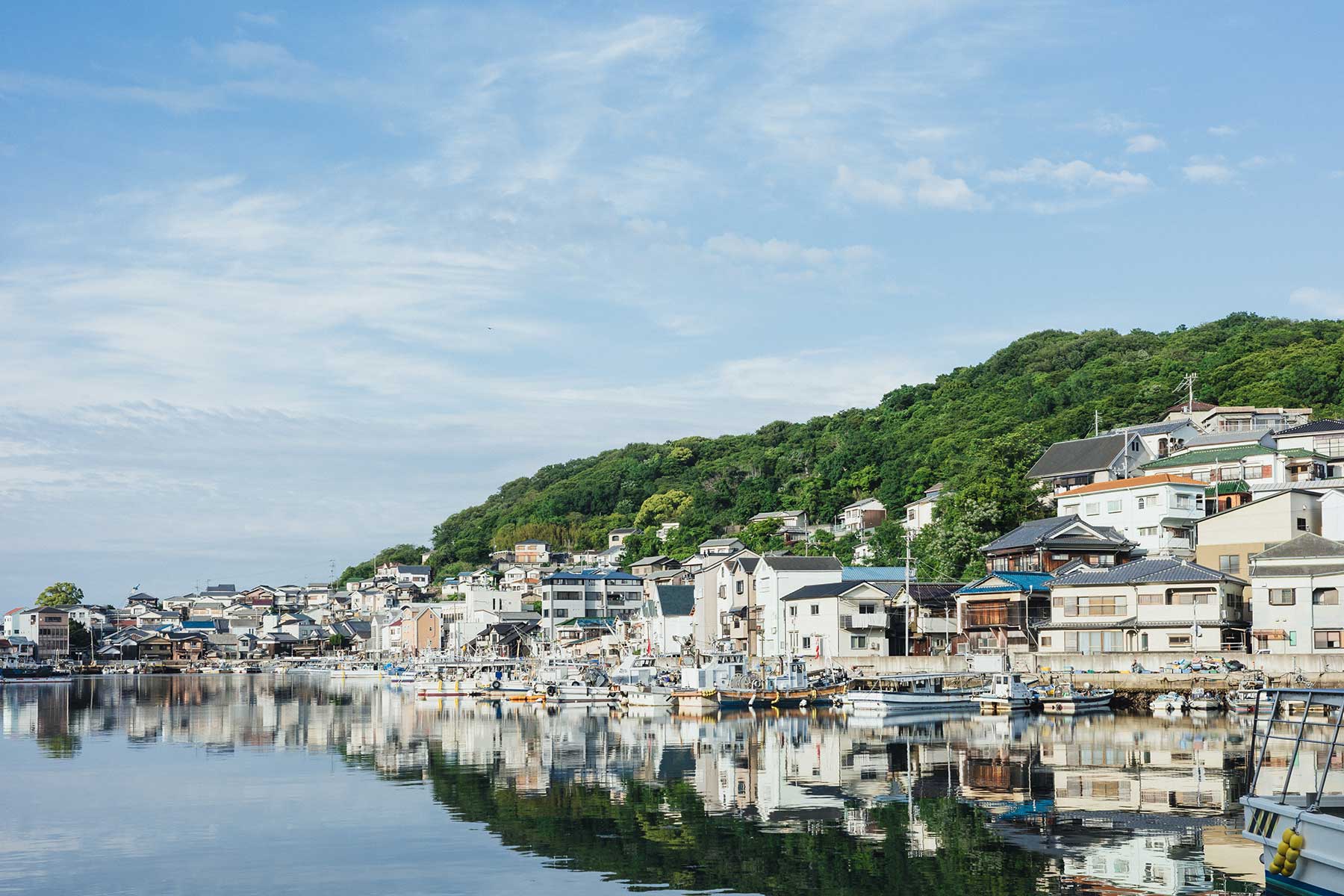
The harbour of Ieshima, houses reflected in still water
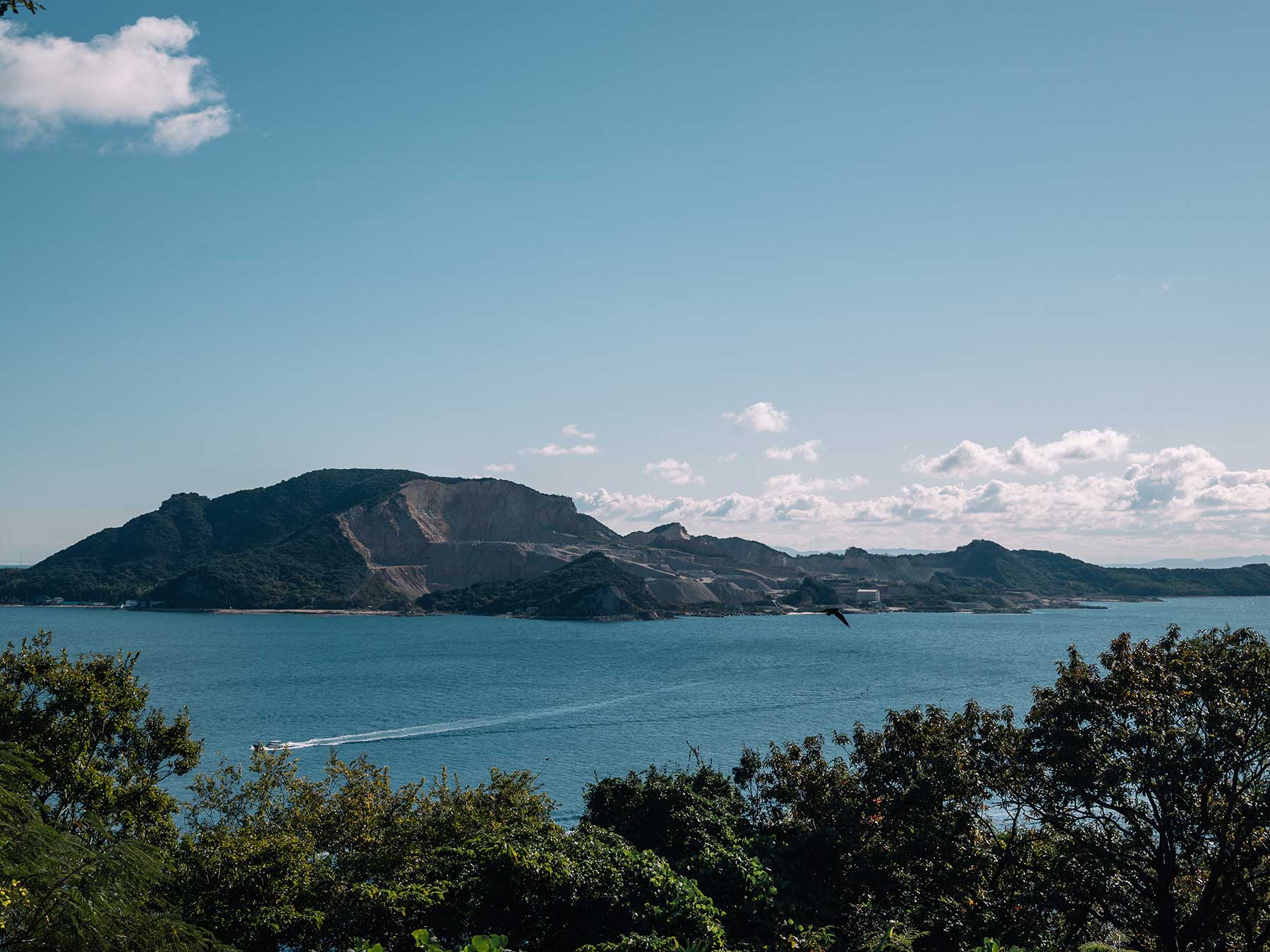
A stone quarry face on the island's northern shore
A narrow street between empty houses in the Miya district

The Host Island
家島 Ieshima

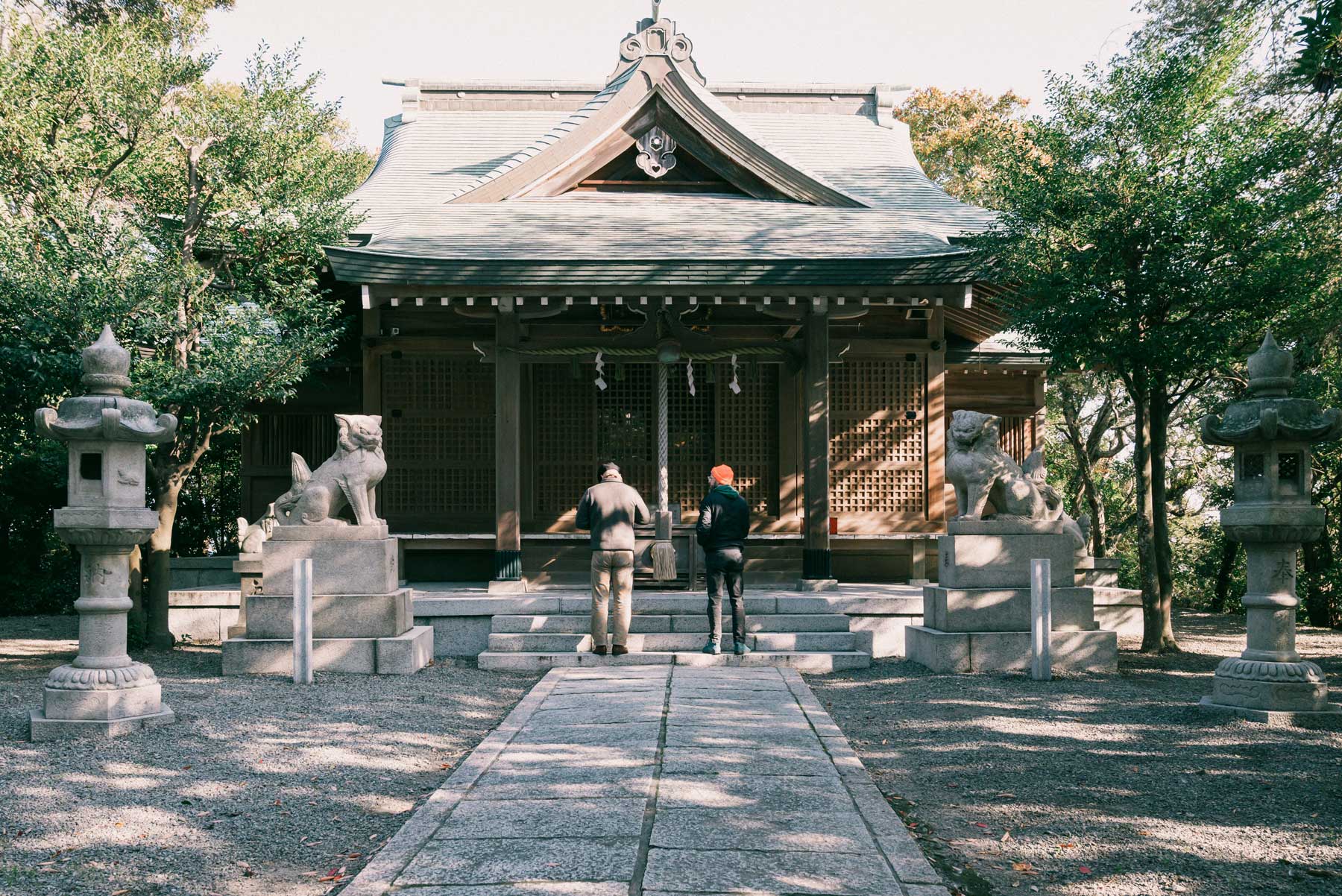
Ieshima is a group of small islands located in the Seto Inland Sea in Hyogo Prefecture near Himeji city. Ieshima is an island between myth and memory. According to tradition, the island was visited by Emperor Jinmu, considered the first emperor of Japan. In the island's shrines, these ancient stories are still present in a discreet but vivid way. In Japan, there are many places where myths and everyday life coexist naturally; Ieshima is one of them. The island's economic activities are closely linked to the sea and they vary by neighborhood.

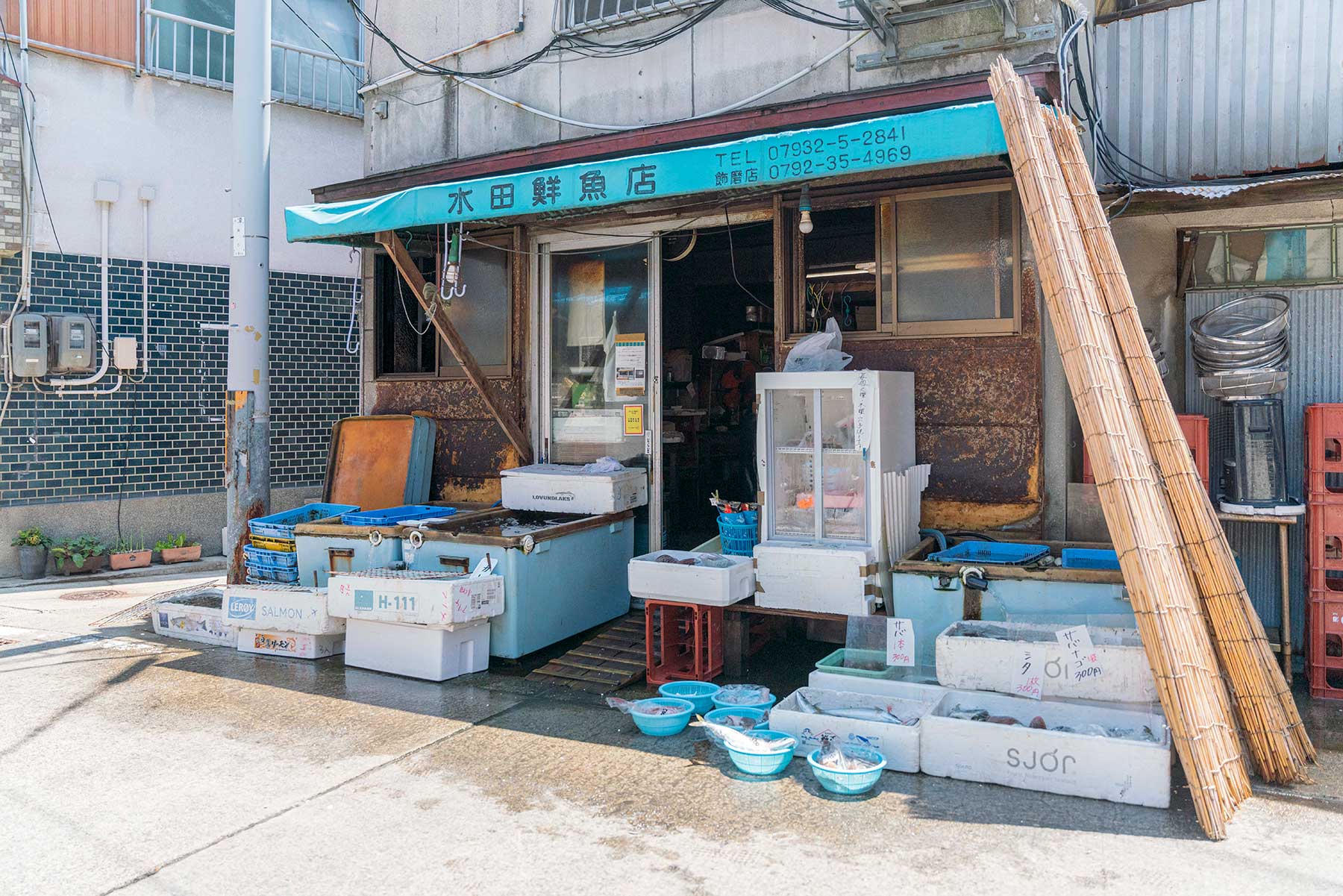
In the Maura district, maritime transport is the main activity, especially for transporting sand and stone to other regions. In the Miya district, fishing is the main activity and it's an integral part of everyday life.

Maritime transport and stone extraction developed especially during Japan's period of rapid economic growth. The materials used to build roads, buildings and infrastructure in big cities come in part from these islands.

So, although Ieshima seems quiet and isolated, it is closely related to the development of large cities such as Tokyo or Osaka. Once a prosperous port of refuge during storms, the island has faced steady population decline over recent decades. Today, its empty houses, slow rhythms, and community of people who have chosen to stay carry something that cannot be found anywhere else.

Ieshima moves at human speed. For someone arriving from a city exhausted by noise and speed, 家島 is the exact kind of sensory contrast that opens the mind.

Why this island

家島 is facing population decline. Its houses are emptying. Its school is emptying. Its fishing community, one of the most vibrant in the Harima Sea, is aging. And yet the people who remain have chosen to stay. That choice is not resignation. It is a statement.

The pilot residency asks: what can creative people and urban thinkers contribute to a community like this? Not as outsiders arriving with solutions, but as residents who walk the streets, listen to the stories, and respond from what they actually encounter in a bilateral discussion with the locals.


Accommodation

Participants will be housed across a combination of Miya Lab, a DIY-renovated lodging space run by our host Ieshima Concierge, and other vacant houses they manage on the island. Wherever possible, each participant will have their own private room. A dedicated shared working space, potentially in a separate empty house adapted for this purpose, will also be available for the group to gather and work together.

Fishing boats moored along the Miya waterfront at dusk

Memory

2027 Residency
Focus

The Ieshima Concierge team has identified something urgent: with an aging population and declining numbers, the traditional life and culture of 家島, the way it has existed until now, is at risk of being lost. There is a felt need to archive it, in some form, before that happens.

The pilot residency responds directly to this need. Its focus is memory: gathering photographic and film archive, objects, and oral histories from the island's residents, their daily lives, their work, their stories, and using that material as the working ground for the residency itself.

This is not archive for its own sake. It becomes the raw material Humo y Piedra works with. El Humo engages with it creatively, through video, photography, writing, or installation, shaped by each participant's own sensibility. La Piedra reads it analytically, looking for patterns in how the community has lived, what is disappearing, and what that reveals about the island's relationship to land, work, and each other.

Held together, these two ways of engaging with the same material can surface something neither could reach alone: not just a record of what 家島 was, but concrete clues toward what might help protect what 家島 still is — ideas for conserving not only its memory, but its living culture and way of life going forward.

At the end of the month, what remains is not only the usual collective document. It is the beginning of a living archive of 家島's memory, something that stays on the island, independent of Humo y Piedra, as a resource for the community itself.
Profiles

The pilot will bring together 4 participants over one month, ideally 2 national artists and 2 international artists.

2 El Humo — national or international creatives
2 La Piedra — national or international researchers or urbanists

This balance, local and international, ensures that the island is understood both from within and from the outside, and that the friction between perspectives happens at every level of the experience.

Selection process

The open call will be published globally through international art residency platforms (ResArtis, Transartists, Alliance of Artists Communities) and through the social media and networks of Humo y Piedra and its organizers.

Applications are differentiated by profile:

El Humo: a concept or ideas to explore during the month (no portfolio required) + a short letter (max 400 words) about why this moment in their life.

La Piedra: academic or professional profile + an ongoing research question or project related to communities, territory, or similar cases like Ieshima.

Selection criteria prioritize genuine curiosity, depth of reflection, and openness to the unexpected — not credentials or prior recognition.


Access and equity: Humo y Piedra operates on a principle of equitable access: not equality of conditions, but equity in practice. Arriving cannot be the obstacle. All accommodation, food, materials, and program are covered for all participants. An international mobility fund covers travel costs for the participants from developing countries.

Programme

  1. Week 1

    Introduction to the island. Arrival, decompression, contemplation. Letting go of daily rhythms. Walking, observing, meeting people. Early conversations with residents begin, and the first gathering of photographs, objects, and oral histories starts here, at whatever pace the community is comfortable with.

  2. Week 2

    Exploration. Joint walks between El Humo and La Piedra. Deeper exchanges with the island community, without agenda. This is also when the collected memory material grows, alongside island-led experiences woven into the residency's rhythm, such as listening to a sermon from a local monk, or joining residents in clearing trees and brush at the island's scenic viewpoints — a chance to focus completely on a task and receive the community's gratitude in return.

  3. Week 3

    Creation. Each person working from their own process, and now also from the memory archive gathered in the first two weeks. Something begins to take form: El Humo shaping it creatively, La Piedra reading it analytically. Shared moments continue, such as a Mochi-tsuki (rice cake making) activity, eaten together with the community at the center.

  4. Week 4

    Closing. An intimate sharing session for the group about the process lived. A closing ritual. The beginning of the collective document, and of the living memory archive that stays with 家島. A public final sharing with the community.

The closing

Humo y Piedra will have an exhibition not of a final work but of the whole process and the main ideas and reflections resultant of the time in the island. One month is time enough for deeper processes related to place research or creation.

Humo y Piedra — Ieshima closes with a process lived and documented. The closing has three moments:

An intimate conversation — for the group only. Each person shares fragments: notes, phone photos, short texts, sketches, open questions. No pressure to show results.

A collective document — a small, beautiful publication (fanzine or editorial PDF) that captures voices, images, and fragments from the month. Something physical that each participant takes with them, and that serves as proof of life for future editions and funders.

A closing ritual — a dinner, a final walk, something that marks the before and after without the pressure to demonstrate anything.

A process exhibition in the community center or any other location in the island.

Who is behind this

いえしまコンシェルジュ株式会社
Ieshima Concierge

Ieshima Concierge is a company dedicated to community development in Ieshima-cho, Himeji City, Hyogo Prefecture.

Feeling a strong sense of doubt regarding the state of architecture and regional communities in a depopulating society, representative Nakanishi, who is a first-class registered architect, moved to Ieshima in 2011 and launched full-scale initiatives.

With the mission of "the survival of island life," the company is working on tourism-based community development on Ieshima. It operates a wide range of initiatives that capture the charm of island life.

These include managing three whole-house rental accommodation facilities renovated from vacant houses, operating a community center commissioned by Himeji City, facilitating vacant house matchmaking, and planning and selling local specialty products. Additionally, the company hosts university student interns and runs a shared villa project created by renovating a vacant inn together with members from outside the island.

These efforts have been highly recognized by the government: Governor of Hyogo Prefecture Award at the 2024 "26th Human-Scale Community Development Awards" and the 5th Urban Development Award (Achievement Category) by the Ministry of Land, Infrastructure, Transport and Tourism.

Andrea Posada

Andrea Posada is a Colombian creative director and graphic designer with over 14 years of experience leading brand identity, experiential design, and visual systems for global organizations. The majority of her work is rooted in urban themes, sustainable cities, urban development, and the future of how communities live together.

She has led full-cycle creative development for large-scale events across more than 18 cities worldwide, from Davos to Katowice, Quito, Dalian, Dubai, to Baku, and created the Universal Brand System of the World Urban Forum (UN-Habitat), now used across multiple countries. Her clients include the United Nations, the World Economic Forum, UNICEF, and governments in Rwanda, Malaysia, and Colombia.

Early in her career, she stayed as an artist in residence in South Korea, China, and Austria — experiences that expanded her understanding of the world in ways she could not have anticipated. Humo y Piedra was born from the desire to make that kind of experience possible for others.

She has lived outside Colombia for over 20 years, working nomadically across continents. She brings an international network, institutional credibility, and a curatorial vision rooted in the belief that displacement is not a challenge — it is the condition that makes creativity possible.